Radio speak for boaters
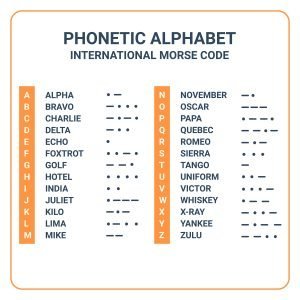
When speaking on VHF or SSB radio, use the phonetic alphabet (see below) to avoid mistakes caused by words, letters and numbers being distorted over the air. The phonetic terms below are internationally recognized. Speak slowly and clearly, emphasizing syllables when spelling out words or numbers. Use procedure words as shorthand for radio communication.
Over: Signifies that you have ended your transmission but expect a reply.
Out: Indicates that you have completed your communication.
Roger: Acknowledges that a message was received and understood.
Affirmative: Indicates agreement. Alternatively, say “yes.”
Negative: Indicates disagreement. Alternatively, say “no.”
Say Again: Requests the sender to repeat the last transmission.
This is [name of boat]: Used to identify you.
Wait: Indicates that you must pause but want the other station to continue listening and is followed by “wait out” to resume communication.
I Spell: Precedes phonetic spelling.
Break: Marks a change in the message.
Word after (or before): Points to a specific word.
Silence (pronounced see-lonce): Spoken by U.S. Coast Guard three times to keep routine traffic off an emergency frequency during a mayday situation. The state is maintained until lifted with “silence fini” (see-lonce fee-nee). –Bob Sweet

Stay connected
Do you know how to use your VHF? Discover the different types of marine radios as well as how to use them with our online seminar, All About Marine Radio.