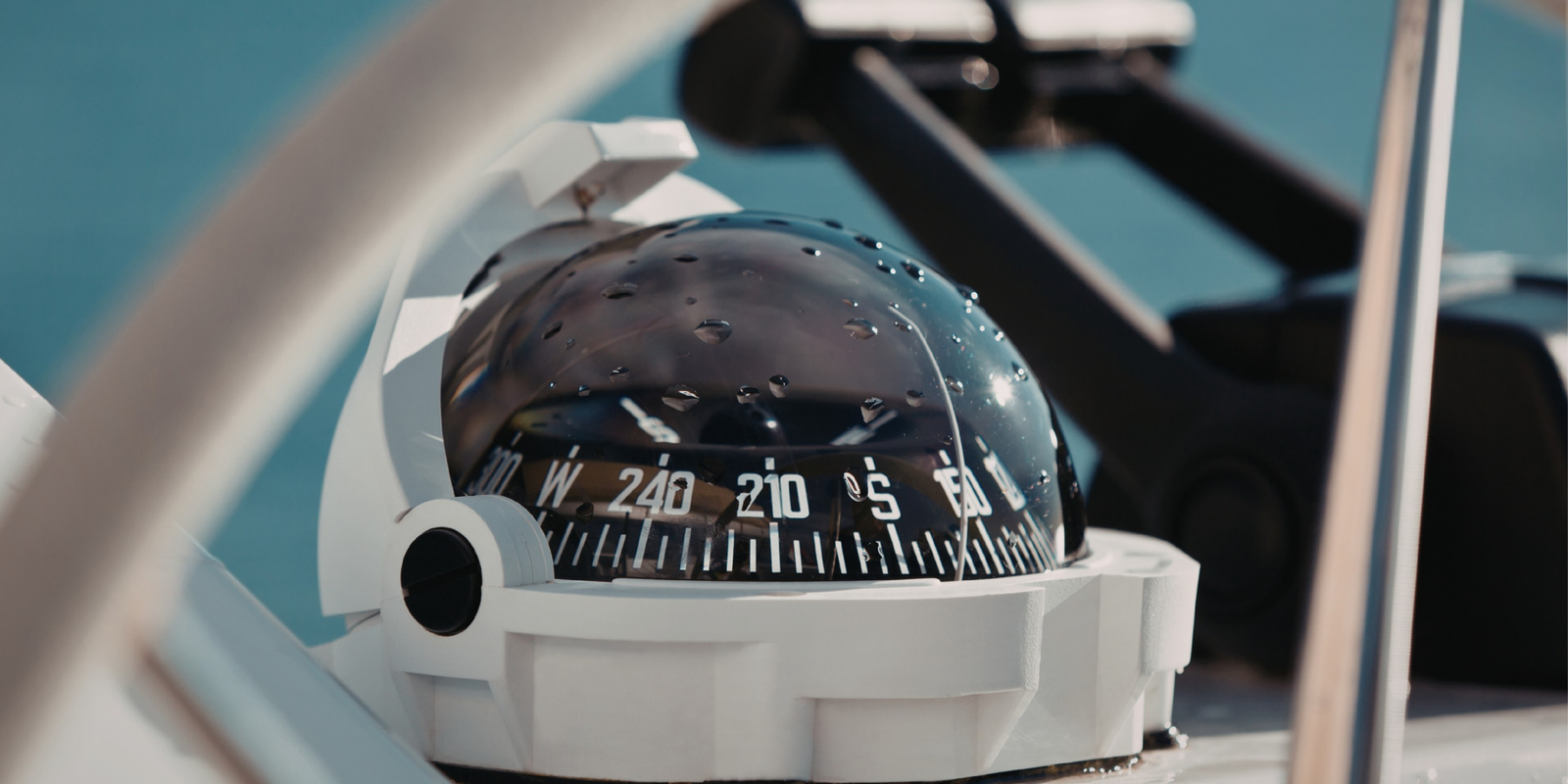
The mariner’s compass
When you lose your electronics at sea, the mariner’s compass can get you home safely. With the prevalence of electronics like the GPS, the lowly but reliable compass is no longer the first-choice navigational accessory on a recreational vessel. But good boaters should always expect failures—usually at the worst possible time. Wires break, fuses blow, connectors corrode, antennas snap, batteries fail—the list goes on.
If you don’t have a compass installed in your navigation station, you should reconsider. Although it isn’t the most expensive navigational instrument, a reliable compass can be counted on when all else fails.
The compass provides the mariner with a quick directional orientation and a fairly accurate course to navigate. The compass allows for quick and accurate readings of range and bearing, and it allows you to determine a course without waiting for an electronic device to reboot or recalculate. Most people can read a compass with little training and should be able to follow a general heading toward a safe harbor.
Just a reminder: A compass does need basic maintenance and should be calibrated with your electronics. It should be installed where it won’t be affected by electric or magnetic fields. Try putting your fish knife or a screwdriver next to the compass to see how it affects the reading.
Create a compass deviation chart on a nice sunny day, so it will be ready when you need it. –Chap Vail

Reach your destination safely
Avoid obstacles and get where you want to go on the water. Get the skills you need with Marine Navigation from America’s Boating Club.