Marina docking safety
Marina docking safety depends on knowing the dock types and conditions available at your chosen marina, including the direction and strength of wind and current. Once you know what to expect, you can formulate a thoughtful docking plan and communicate it to your crew.
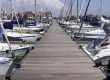
You might encounter floating finger docks, fixed finger docks, fixed docks with pilings, docks with protective facings, concrete wall docks, Med moor docks and others. Each situation requires different mooring line and fender placement, but with proper preparation and a competent deck crew, docking can be straightforward even with strong winds, tides and currents.
Let’s consider one of the tougher examples of marina docking: short, dual-slip finger docks where you must stabilize the bow with bow lines to pilings 5 to 10 feet beyond the bow and tie the stern near the land end of the slip. This situation requires you to back the boat while attaching the bow lines on the way in.
Preparing the bow lines
Successful docking in this situation requires long bow lines (30 feet or more) properly prepared and attached at the bow, shorter docking lines prepared and ready at the stern, and possibly a spring line on each side to stabilize the boat’s distance from the dock. All lines should be readied by the deck crew before you approach the slip.
Preparing the fenders
Next, you need to prepare the fenders. If the boat rails will rest against exposed dock pilings, don’t put fenders over the sides until the boat is nearly secured. In a dual slip, you’ll want to be careful to set fenders at the proper height along the side of the boat.
Determining the wind and current
After readying lines and fenders, take stock of the wind and current to determine which way the boat will want to move without power applied. This type of docking takes several minutes to complete because of the complexity of deploying the bow lines.
When handling the boat, go slow. When you are about two-thirds of the way into the slip, be prepared to gently bump into the dock, the pilings or the adjoining boat with properly deployed fenders, and rest there while the bow lines are rigged.
To set the bow lines, the deck crew should stand as close to the bow as possible on the widest part of the boat and pass the prepared lines (already attached to bow cleats) around the pilings and loosely back to the cleats. Deploy these lines with one line on each side while the boat is standing still.
Once the bow lines are attached and slack, back the boat the rest of the way into the slip and attach two stern lines to properly situate the boat left to right and restrain it from going forward. The last step is to tighten the bow lines on each side. –John Harris

Become a better boater
Learn the basics so you can boat with confidence and have more fun on the water. Take America’s Boating Course today.